AI Search ·March 17, 2026·4 min read·Updated May 21, 2026
How to Know If AI Models Are Recommending Your Brand
AI engines are replacing traditional search bars. If your business isn't actively
monitoring its semantic footprint, you're missing out on the primary way modern buyers discover products.
Here is how to track and optimize your brand inside generative models.
How to Know If AI Models Are Recommending Your Brand
Think about the last time you needed a complex recommendation. Maybe you were looking for the best enterprise CRM for a scaling team, or a durable winter jacket for a trip to Iceland. A few years ago, you would have spent an hour opening fifteen different tabs from Google’s first page, dodging pop-ups, and filtering through affiliate blogs.
Today? You open ChatGPT, Claude, or Gemini, and you just ask. In less than five seconds, the AI gives you a curated list of three specific brands, explaining exactly why each fits your criteria. It feels like magic for the user. But as a business owner, a marketer, or a growth strategist, it brings an entirely new, slightly terrifying question to mind: Is my brand being mentioned in those five seconds, or do we simply not exist in the eyes of LLMs?
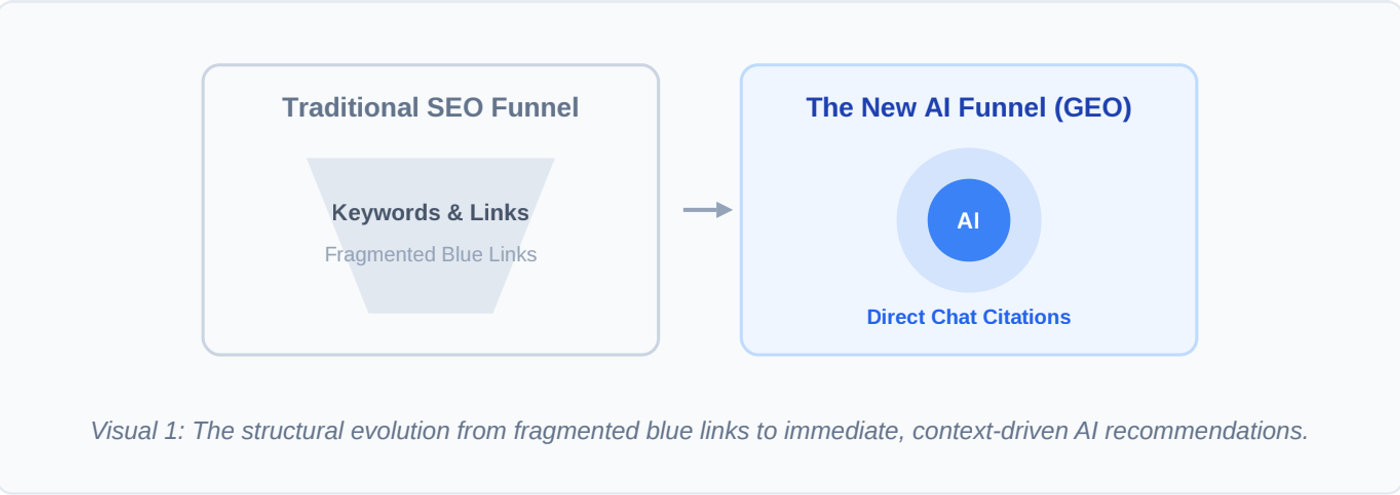
Welcome to the era of Generative Engine Optimization (GEO). The mechanics of visibility have fundamentally shifted, and traditional SEO tools that track your rank on a static blue link page cannot help you here. To win the future of search, you need to master ai brand tracking.
Why Traditional Web Analytics Leave You Blind in the AI Era
In the past, tracking your brand visibility was simple. You monitored your organic impressions, tracked keyword positions via Google Search Console, and checked your backlink profile. If you were on page one, you got traffic.
But AI engines like Perplexity, ChatGPT Search, and Google's Gemini do not look at web pages the same way humans do. They ingest vast pools of data, analyze sentiment, cross-reference user reviews, and summarize the consensus. When an AI agent recommends a product, it builds an answer based on trust, context, and structural authority. If your brand is highly visible on standard search engines but lacks structured semantic footprints, AI models will ignore it.
This is why continuous ai brand tracking is no longer a luxury, it is a critical pillar of modern digital strategy. Without a dedicated framework to audit how these large language models perceive and output your company, you are effectively flying blind in a market that is rapidly moving away from traditional browsing.
Are you curious about how your brand currently ranks in AI-driven answers? Discover how tailored AI search visibility strategies can transform your outreach at Upsearch .
The Three Core Metrics of Modern AI Brand Tracking
To build a sustainable digital presence that stands out in AI search queries, your marketing team needs to pivot from standard rankings to generative brand metrics. Effective tracking relies heavily on three core dimensions:
1. Share of Model Voice (SoMV)
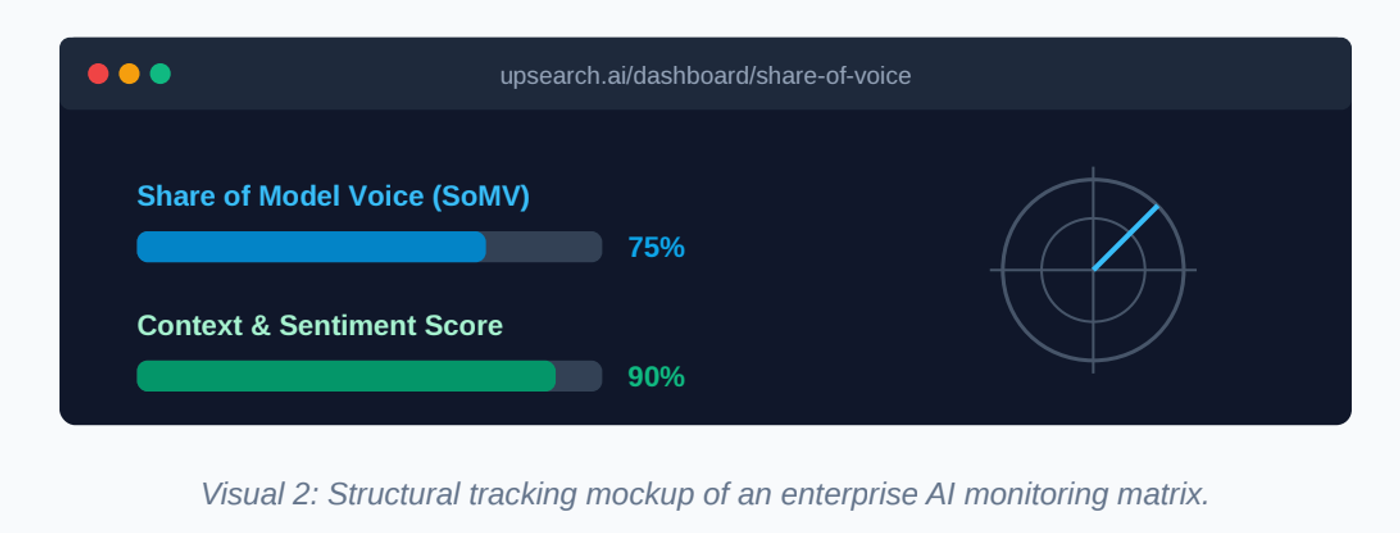
Just like Share of Voice in traditional PR measures your brand's presence in media, Share of Model Voice tracks how often an LLM includes your brand when prompted with relevant industry queries. For example, if someone asks an AI for the "top software solutions for real estate workflows,"What percentage of those answers highlight your product?
2. Sentiment & Contextual Alignment
AI models don’t just list your name; they describe you. If a model consistently introduces your brand as a "budget-friendly but limited option," that becomes the reality for thousands of users. Tracking the adjectives and contextual frameworks surrounding your brand within AI responses is vital to maintaining an accurate market position.
3. Citation and Source Verification
Newer search engines rely heavily on retrieval-augmented generation (RAG) to source their claims. Tracking which specific blogs, documentation pages, or third-party review platforms the AI links to allows you to build a proactive backlink blueprint that directly feeds the LLM pipelines.
How to Take Control of Your AI Footprint
Optimizing your infrastructure for AI recommendation engines isn't about finding a quick loophole or a system bug. It requires building deep, high-value, structured content that AI models can read, digest, and trust effortlessly.
Start by producing deep-dive educational resources, expanding your schema markups, and actively managing public sentiment on trusted review networks. The cleaner and more definitive your public data footprint is, the more likely generative engines will choose your brand as the definitive authority.
At Upsearch , we specialize in helping forward-thinking enterprises navigate this massive shift. By tracking AI sentiment, refining search authority, and deploying advanced optimization strategies tailored for generative engines, we ensure your brand remains front and center where your customers are actually looking.
Newsletter
Get the next AI search signal in your inbox.
Short, useful updates on AI visibility, citations, prompts, and category positioning.